AICell scan
Full-surface digitization directly in the production line.
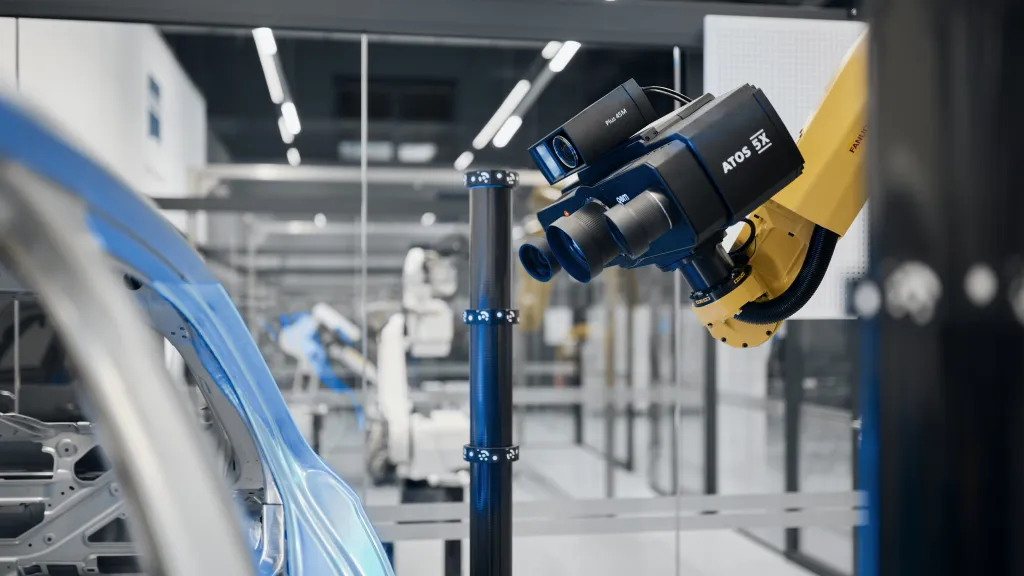
If you know the geometry of a component across its entire surface, you can get more out of it. That is precisely the idea behind the AICell scan: it digitizes entire components in 3D and creates a geometric digital twin that enables far more analyses than traditional point-based measurement. Instead of individual measurement points, a complete image is created that reflects reality so precisely that it can be used for calculations just like the component itself.
The digital twin is the foundation for what we call digital assembly: Instead of waiting until components meet on the assembly line, it is possible to predict on the model how the components will fit together later. Shape, position, and dimensions - all verifiable in the virtual assembly before the actual component is installed. This identifies early on where intervention is needed and shortens correction cycles. What in the physical assembly only becomes visible once the component is already mounted in the body is already determined in the model hours beforehand.
This is made visible through false-color displays that immediately and clearly highlight deviations. This allows trends in the process to be identified early on, long before they lead to scrap. Rolling inspections safeguard the production run without affecting the cycle time - even during breaks and buffer periods when the line would otherwise be idle.
The AICell scan is thus not only a tool for geometric inspection but also an instrument for predictive process monitoring. It provides the data foundation on which quality is controlled early on rather than corrected afterward.